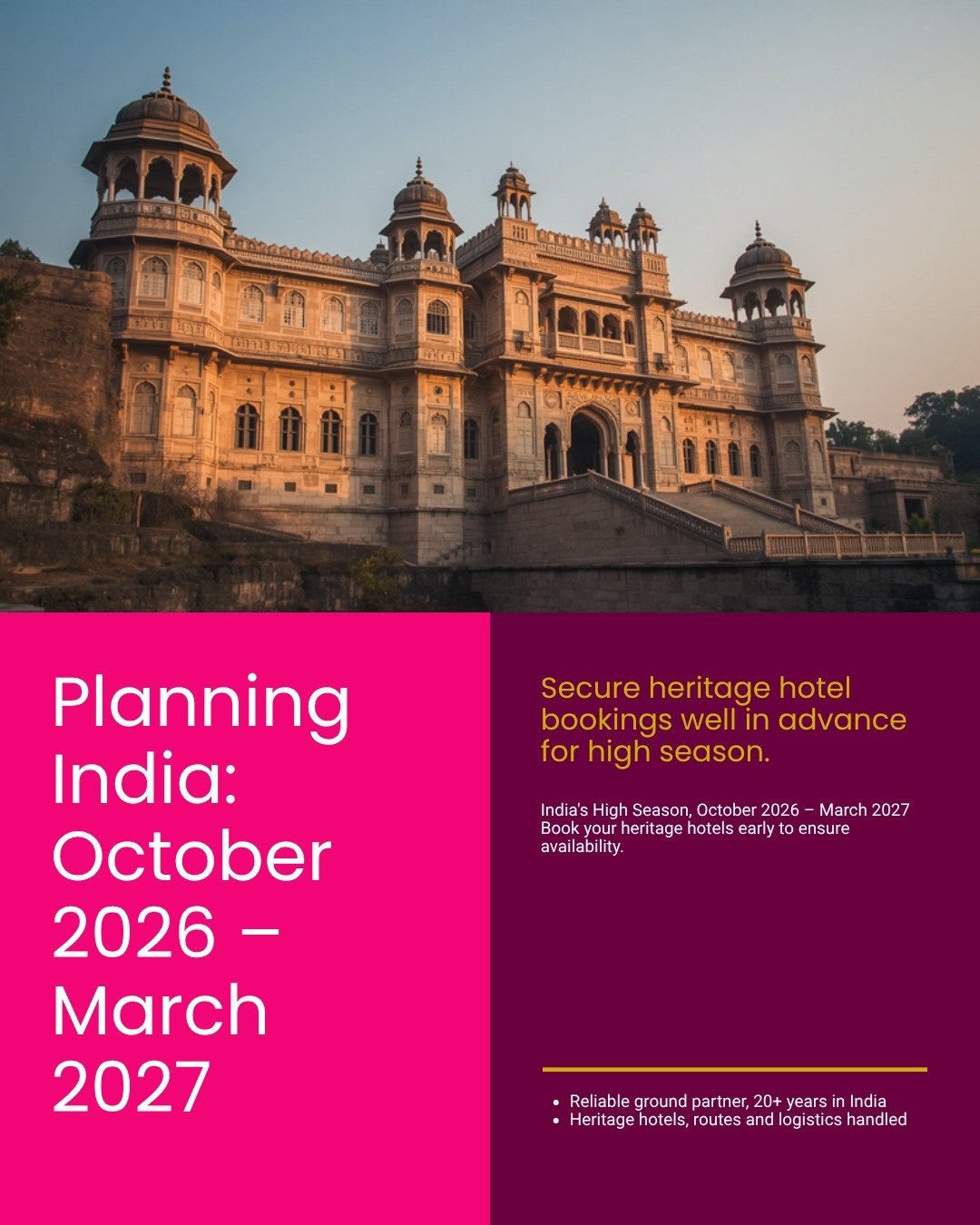
India's main travel season runs from October to March. For travel agencies and tour operators building 2026–27 programmes, the hotels and ground services that decide a trip's quality are confirmed months ahead — much of that work happens in June and July. This guide sets out what to book early, what can wait, and the dates that affect pricing, so your quotes stay deliverable and your clients get the properties they were promised.
At a glance
- Confirm core and heritage hotels for November–February before August.
- Plan arrivals around the Diwali and Pushkar windows in early November.
- Limited-key palace hotels, houseboats, safari permits and special trains sell out first.
- Hold provisional space early; release it if the booking does not convert.
The India high season: October to March
Across most of the country, October to March brings clear mornings, comfortable touring temperatures in the north, and the fullest festival calendar of the year. It is the window most travellers want, which is why demand and rates climb from October onward and stay high through the Christmas–New Year peak. Planning a route around this season is straightforward; securing the right hotels inside it is the harder part. The popular circuits — the golden triangle, Rajasthan's heritage cities, Kerala's backwaters — carry the most pressure, because the same limited set of well-run properties serves every operator at once.
Why early booking decides availability
Many of India's most sought-after properties — heritage hotels and former palaces in Udaipur, Jaipur and Jodhpur — are limited-key. A palace with 12 to 20 rooms cannot expand for peak demand. It releases its best space early and holds firm. Agencies that confirm core hotels before August generally get the properties they want; those who wait until September rebuild itineraries around what is left.
This is not about urgency. It is simply how limited inventory works. If you are quoting a client for November to February now, it is worth holding the core hotel space even before the booking is firm. A reliable ground partner can block rooms on a provisional basis and release them if the booking does not convert — which keeps your quote honest without committing the client prematurely.
Festival dates that affect pricing
Two windows in particular move rates and occupancy across Rajasthan and the north:
- The Diwali period (early November) — domestic travel peaks and many hotels apply festival rates.
- The Pushkar fair window (early November) — accommodation across the Ajmer–Pushkar area tightens sharply.
The Christmas and New Year fortnight in late December is the single highest-demand stretch of the season, with festival rates and minimum-stay rules at heritage and beach properties. Plan arrivals around these dates deliberately, rather than discovering their effect late in the quoting process.
Region by region: where booking early matters most
Some parts of an India programme need a longer lead time than others:
- Rajasthan heritage hotels — palaces and havelis in Udaipur, Jaipur, Jodhpur and Jaisalmer. The first to sell, especially over festival dates.
- Kerala backwaters — premium houseboats and a small number of well-run backwater resorts book out for the December–January peak.
- Goa — the late-December fortnight runs at peak rates with minimum stays.
- Wildlife — safari permits and the better lodges at Ranthambhore and other parks are capped by the forest authorities, so they go early.
- Special trains — luxury rail such as the Palace on Wheels and the Maharajas' Express runs fixed departures with limited cabins.
A booking timeline for agencies
Confirm now (June–July): core hotels for November to January arrivals; any palace or heritage stays; domestic flights for fixed-date groups; special-train segments; safari permits.
Can wait (August–September): guide assignments, restaurant bookings, optional excursions, and final rooming lists.
Group departures: fixed-date groups for November to February should hold space before August, as allocation tightens after the summer.
Budgeting and currency
High-season rates are higher, and festival dates carry their own supplements, so it pays to cost programmes early and quote in your client's currency with clear inclusions. Building the budget now — rather than at the point of confirmation — means no surprises when the client is ready to commit, and it lets you advise honestly on where a few days' shift in dates changes the price.
How a DMC supports your high-season planning
A destination management company handles the work that happens before a client travels: holding provisional hotel space so a quote is deliverable, flagging festival dates that change access and pricing, building routes with realistic drive times, and costing the programme in your currency with clear inclusions. By the time the traveller arrives, the groundwork was done months earlier — which is exactly why the planning months matter.
Building India for the 2026–27 season?
Send us the brief and we'll return availability and a costed plan.
Frequently asked questions
When is the best time to visit India?
For most of the country, October to March is the main travel season — clear weather in the north, comfortable touring temperatures, and the fullest festival calendar. Hill stations and parts of the south also suit other months, but Oct–Mar is the period most programmes are built around.
How far ahead should agencies book India hotels for high season?
Confirm core and heritage hotels before August for November–February arrivals. Limited-key palace hotels release their best rooms early and do not reopen them, so late confirmation usually means taking what remains rather than choosing.
Which dates affect India hotel pricing in the high season?
The Diwali period and the Pushkar fair window, both in early November, lift rates and occupancy across Rajasthan and the north. The Christmas–New Year fortnight in late December is the highest-demand stretch, with festival rates and minimum stays.
What should be booked first for a peak-season India tour?
Heritage and palace hotels, premium Kerala houseboats, wildlife safari permits and any luxury-train segments — all are limited in number and sell earliest. Guides, restaurants and optional excursions can be confirmed closer to travel.
What does an India DMC do during the planning months?
It holds provisional hotel space, flags festival dates, builds realistic routes, and costs the programme in your currency — so that when the client confirms, the arrangements are already in place.