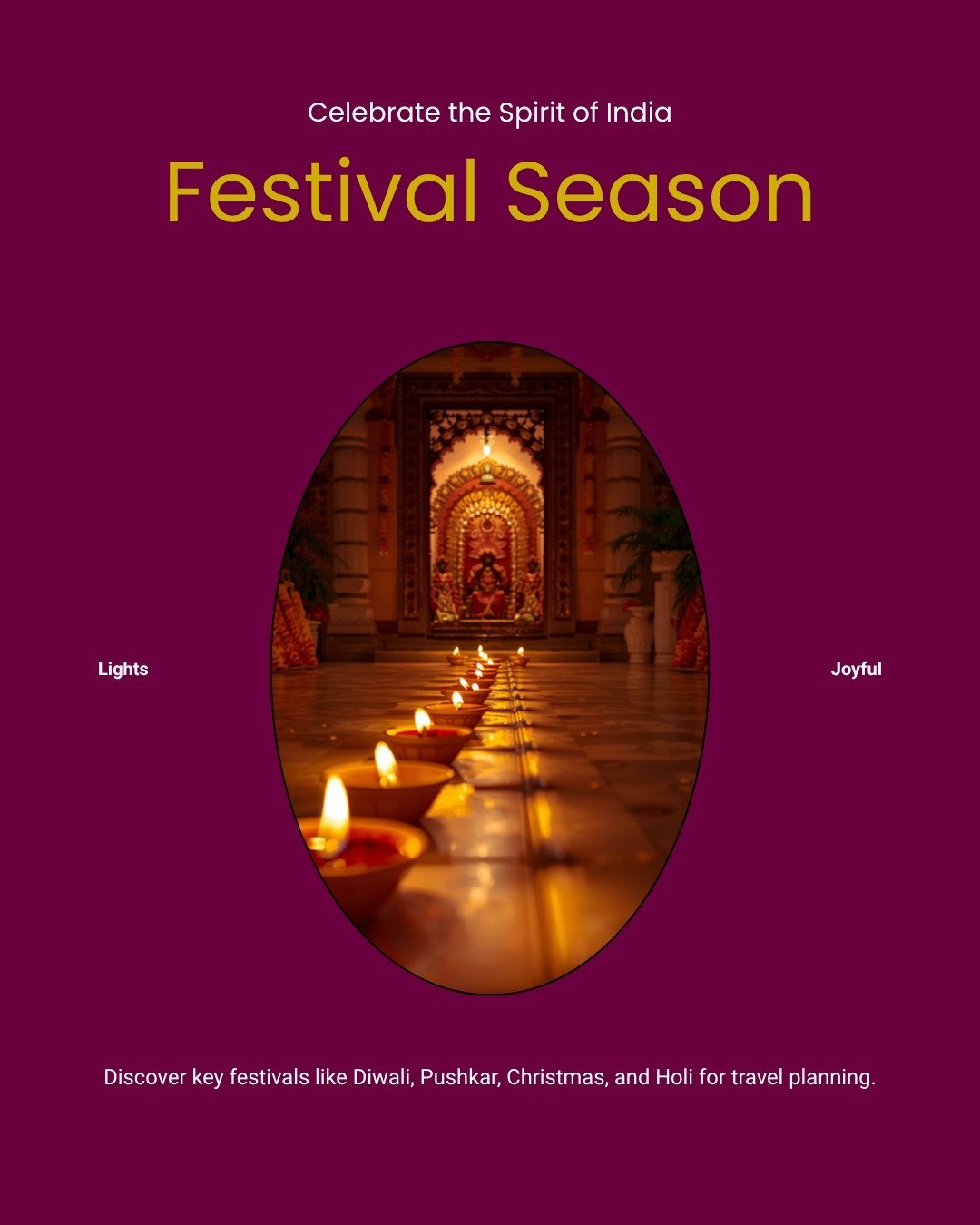
India's main travel season — October to March — overlaps its fullest festival calendar. For travel agencies building 2026–27 programmes, festivals are not just colour on the itinerary: they change hotel rates, availability and site access. This guide sets out the festival windows that matter, where they hit hardest, and how to plan around them so your clients get the experience and the price you quoted.
At a glance
- Diwali (early Nov) and Christmas–New Year (late Dec) drive the highest demand and rates.
- The Pushkar fair sharply tightens accommodation across the Ajmer–Pushkar area.
- Decide early whether the client travels during a festival or just outside it.
- Confirm festival-period hotels months ahead; they fill earliest and reopen the least.
Why festivals affect your bookings
During major festivals, domestic travel rises, hotels apply festival-period rates, and the best properties fill early. Some monuments and temples change their timings or restrict access on festival days, and roads in old-city areas can close to traffic for processions. A client arriving the week of a large festival has a different experience — and a different cost — from one arriving a fortnight later. Knowing the calendar lets you place arrivals deliberately rather than discover the effect during quoting.
The festival windows to plan around (Oct 2026 – Mar 2027)
- Dussehra (October) — celebrated across the north; notable in cities such as Mysuru and Varanasi. Sites get busier and demand rises as the season opens.
- Diwali (early November) — the year's peak domestic travel period. Hotels apply festival rates and fill early; book core properties well ahead for any early-November arrival.
- Pushkar Camel Fair (early November) — accommodation across the Ajmer–Pushkar area tightens sharply for the fair dates. Confirm rooms months in advance if the fair is on the route.
- Christmas and New Year (late December) — the highest-demand fortnight of the season, especially for heritage and beach properties in Rajasthan and Goa. Festival rates and minimum-stay rules apply.
- Holi (March 2027) — marks the close of the high season; popular with travellers who want to take part, and worth flagging to clients who would prefer to avoid the crowds.
Where festivals hit hardest
The pressure is not evenly spread. Rajasthan feels Diwali and the Pushkar fair most sharply, with heritage hotels at festival rates and the Ajmer–Pushkar belt close to full. Varanasi draws crowds around its festival calendar through the autumn. Goa and the Kerala backwaters run at their highest rates over Christmas and New Year. Holi is felt across the north, with Mathura and Vrindavan near Agra particularly busy. Matching the route to these pressure points — or steering around them — is part of building a realistic programme.
Plan the client into — or around — the festival
Some travellers want to be in India for Diwali or Holi; others would rather avoid the price and crowd peaks. Neither is right or wrong, but it is a decision to make early, because it drives hotel choice, routing and budget. A client who wants to witness Diwali should be placed where the festival is at its best and booked early; a client who wants quiet touring is better a week or two either side. Confirm the preference before building the itinerary, not after.
Practical logistics during festival weeks
Beyond rates, festival weeks change the mechanics of a day. Monument and temple timings can shift, some sites close on the festival day itself, and old-city roads may be given over to processions, which lengthens transfers. Domestic flights and trains are busier and book up, so fixed-date segments need confirming early. None of this is a reason to avoid festival travel — it is a reason to plan it properly, with a ground partner checking the day's arrangements against the itinerary.
Budgeting for festival dates
Festival weeks carry supplements that a standard seasonal rate does not show, so it pays to cost a festival-period programme early and quote in the client's currency with the festival nights itemised. A few days' shift around Diwali or the Christmas fortnight can change the total noticeably, and clients value seeing that trade-off clearly rather than meeting it at confirmation. Building the budget now also lets you hold festival-rate hotel space before it tightens, so the figure you quote is the figure the client pays. Where a festival supplement applies, flag it in the quote rather than absorbing it silently — transparency on festival pricing is part of a deliverable B2B offer, and it protects your margin as much as the client's trust.
How a DMC handles festival-season logistics
A destination management company tracks the festival calendar against your route: holding hotel space before festival rates apply, checking monument timings on festival days, building realistic drive times around busier roads, and confirming flights and trains for fixed-date segments. By the time the client travels, the calendar has already been accounted for.
Mapping a festival-season itinerary for 2026–27?
Send us the dates and we'll flag the festival windows and hold the right hotel space.
Frequently asked questions
Which Indian festivals affect travel pricing the most?
Diwali in early November and the Christmas–New Year fortnight in late December drive the highest demand and rates. The Pushkar fair sharply tightens accommodation in its area, and Dussehra and Holi raise demand at the start and end of the season.
Should clients travel during a festival or avoid it?
It depends on the client. Festival travel offers a fuller experience but comes with higher rates and crowds. Travellers who prefer quieter touring are better placed a week or two either side. Decide before building the itinerary.
How far ahead should festival-period hotels be booked?
Confirm core hotels months ahead for any arrival around Diwali, the Pushkar fair, or Christmas–New Year. These windows fill earliest and reopen the least.
Do monuments stay open during festivals?
Most do, but timings and access can change on specific festival days, and some sites close. A ground partner confirms the day's arrangements so the itinerary holds.
Where is the best place to experience Diwali or Holi in India?
Diwali is felt strongly across Rajasthan and the north; Holi is associated with Mathura and Vrindavan near Agra, as well as the wider north. The right placement depends on the rest of the route, which is why it is worth planning early.