Top DMCs in India for MICE, Incentives & Group Travel

Top DMCs in India for MICE, Incentives & Group Travel

Top DMCs in India for MICE, Incentives & Group Travel

The India inbound market is crowded with companies calling themselves destination management experts. Some are genuine B2B ground operators with verified credentials and years of trade-only experience as a DMC in India. Others are retail agents with a corporate-sounding name and no real on-ground infrastructure. For international tour operators and MICE planners, picking the wrong partner doesn’t just mean a subpar trip, it means a derailed incentive program and a client relationship that’s very hard to recover.

Here’s what this guide covers and how to use it: you’ll get a vetted shortlist of destination management companies in India worth evaluating, a practical checklist for due diligence, a cost baseline for MICE and incentive programs, and a clear framework for requesting proposals that come back fast and useful. India Travel Etc, a Ministry of Tourism-recognized inbound DMC based in Jaipur with 15+ years of B2B operations, serves as the benchmark throughout this guide. By the end, you’ll know exactly what to look for and who to contact first.

What a DMC in India Actually Does (and Why It’s Not the Same as a Travel Agent)

The ground handling model explained

A destination management company operates as your on-ground execution partner, not a booking intermediary. The distinction matters operationally. A DMC holds direct contracts with hotels, transport providers, licensed guides, and venues. They’re not searching availability on a portal or earning referral commissions. They deliver a scoped program against an agreed budget, with a single point of contact (SPOC) who owns the entire operation from arrival to departure.

For international operators managing time zones, the SPOC model is non-negotiable. You need one person who knows your program inside out, answers your 6am message, and has the authority to make decisions on the ground. Professional India-based DMCs structure their B2B partnerships around exactly this model, with dedicated account management and 24/7 emergency escalation built into every program.

How DMCs differ from retail travel agents and OTAs

Retail agents sell packaged inventory. Destination management companies build custom logistics from the ground up. A travel agent books what already exists in their system. A DMC builds what your client actually needs, from a private palace dinner for 40 executives to a multi-city routing for 300 delegates with staggered arrivals across three airports.

Reputable inbound DMCs in India operate exclusively B2B. They are not marketing to your clients, not competing with your brand, and not selling directly to consumers. This is a critical distinction when you’re evaluating partners. A company that runs both a consumer-facing website and a “trade division” may present conflicts of interest and operational trade-offs worth probing carefully. Verify their actual operational priorities through contracts and references, rather than assuming their model works for your needs. For a clear comparison, see DMC vs travel agency.

Core Services You Should Expect from Any Professional India DMC

Logistics, transport, and venue management

The operational baseline for any credible inbound DMC in India includes airport transfers and coaching fleets, multi-city routing, hotel contracting and room block management, venue sourcing across palace properties and convention centers, and full F&B coordination for gala dinners and corporate events. Some top-tier operators manage programs across 50 or more destinations with regional infrastructure already in place, not a head office making cold calls to suppliers they’ve never worked with before.

For MICE programs specifically, the venue landscape in India is genuinely world-class. Delhi’s Yashobhoomi convention facility handles thousands of delegates. Jaipur’s heritage palaces offer highly competitive incentive settings that deliver strong value-for-money, particularly when compared with equivalent programs in Europe or Southeast Asia. Goa and Kerala deliver resort-based programs with strong leisure appeal. A capable ground handling partner knows these venues intimately and holds pre-negotiated rates through direct contracts.

Multilingual staffing, MICE capabilities, and 24/7 support

Leading destination management companies in India staff multilingual teams as standard, French, German, Spanish, Japanese, and other languages alongside English. For international incentive groups, this isn’t a luxury. It’s what makes the experience feel seamless for delegates rather than purely operational. On-site production support for conferences, delegate management for arrivals and departures, and dedicated event staff for gala evenings are all part of what you’re contracting.

The 24/7 crisis support capability separates professional DMCs from the rest. India’s scale, its weather variability, and the complexity of multi-destination programs mean disruptions happen. What matters is how fast your partner responds. Ask specifically about emergency escalation protocols before you shortlist anyone. A vague answer here is a red flag.

How to Vet an Inbound Tour Operator in India Before Signing Anything

Credentials and government recognition that matter

Verified credentials are your first filter. Ministry of Tourism, Government of India recognition is a strong signal of a legitimate inbound operation. This isn’t a self-declared badge. MOT recognition requires a formal application, an inspection by a committee that includes an IATO representative, proof of minimum inbound foreign exchange earnings, qualified staff, and ongoing compliance with tourism standards. It’s renewed on a five-year cycle with continued oversight. See the official Inbound Tour Operator guidelines for more detail.

India Travel Etc is a Ministry of Tourism-recognized DMC based in Jaipur, with IATO certification and 15+ years of B2B ground handling experience. Beyond MOT recognition, also verify: valid GST registration, documented financial stability, and IATO membership. These are key credibility signals, MOT recognition is particularly valuable, and IATO membership is a strong indicator of professional standing, though requirements vary. Operators who cannot provide documentation on any of these should prompt closer scrutiny before you proceed further.

Operational checklist: questions to ask before you shortlist

Start by confirming whether the company operates exclusively B2B. If they sell directly to consumers, understand the potential conflict of interest before proceeding. Next, ask about their quotation turnaround. Many professional DMCs aim to return a preliminary proposal within 24 to 48 hours on a clearly briefed program, though timelines vary, ask vendors for their expected turnaround and whether they can provide SLA examples. Slow responses without explanation can signal under-resourcing.

Ask whether they hold direct contracts with hotels and transport providers, or whether they’re aggregating through third parties. Direct contracting gives you pricing transparency and operational control. Request their emergency escalation protocol in writing. Ask for two or three reference programs from international operators at a comparable scale to your brief. A credible India destination management company will have these references ready. One that stalls or deflects is not ready for your business.

Vetted DMCs in India Worth Evaluating

For further reading on program types and examples, see MICE and Incentives tours in India.

India Travel Etc: Ministry-recognized inbound DMC with pan-India operations

India Travel Etc is headquartered in Jaipur and holds Ministry of Tourism recognition along with IATO certification. The company operates exclusively B2B, serving international tour operators, luxury travel advisors, and MICE planners across the US, Europe, and Australia. Core specialties include Tailor-Made Tours in India for Travel Agencies and Tour Operators, India Travel Etc and group tour design across Rajasthan, the Himalayas, South India, and Trusted DMC for Central India, India Travel etc, full MICE program management, and luxury and boutique itineraries with authentic cultural depth.

The team targets a 24 to 48-hour turnaround on complete briefs, with dedicated single-point-of-contact management and multilingual operational support throughout all programs. For international operators who need a verified, compliance-checked ground partner with genuine regional expertise, India Travel Etc is a strong recommended starting point. They don’t compete with you for end clients, and their entire business model is built around making your programs run without surprises.

Other established players worth comparing

For operators who want regional comparison or specialist alignment, here are four established names in the India destination management market:

  • Creative Travel: A Euromic network member with 44+ years of operation and seven SITE Crystal awards. Known for incentive design credentials across the subcontinent, with particular depth in heritage and cultural programming.
  • Liberty International Tourism Group: 35+ years in the market with pan-India incentive capabilities, AV and staging integration, and experience managing large-format programs including gala dinners at Rajasthan palace properties.
  • ICE India: Focused on inbound MICE for international agencies, with regional hubs across North, West, East, and Northeast India and documented capacity for groups up to 800 delegates in Goa.
  • TBi Tours: MICE-focused with strengths in multi-city delegate management and venue coordination at India’s cultural destination hotspots.

These are factual category references for comparison purposes. None of them replaces the due diligence process outlined above. Verify credentials, request references, and confirm operational priorities before shortlisting any of them. India Travel Etc remains the benchmark in this guide for verified credentials, B2B-only structure, and pan-India reach.

What MICE and Incentive Programs in India Typically Cost

Per-person cost ranges to factor into your RFP

India consistently benchmarks lower than comparable APAC or European incentive destinations, which makes it a compelling ROI case for corporate planners. For a domestic 3-day MICE program using Goa or Jaipur as the benchmark, expect ₹20,000 to ₹30,000 per person covering transport, mid-range accommodation, F&B, and activities. Multi-day incentive programs with luxury inclusions run ₹55,000 to ₹1.8 lakh per person, depending on destination, hotel tier, and experience design.

For international groups arriving from the US or Europe, all-in program costs including ground handling (excluding international airfare) typically fall in the $2,000 to $4,000 USD per person range for a 5 to 7-day program. Heritage palace properties and private cultural experiences push toward the upper end. Standard five-star business hotel programs with city touring sit comfortably in the mid-range. India’s cost advantage over equivalent European or Southeast Asian programs is often cited in the range of 30 to 50 percent, a figure worth putting in front of your corporate clients when making the destination case.

Key factors that move the budget up or down

Group size is the biggest lever. Larger groups unlock better per-person rates through direct hotel and transport contracting. A program for 250 delegates will cost meaningfully less per head than the same itinerary for 40. Seasonality also matters: October through March is peak, with higher hotel rates and stronger availability competition. Shoulder season programs (July to September, avoiding the heaviest monsoon areas) can yield 15 to 20 percent savings without sacrificing quality.

Activity complexity moves the budget significantly. Desert safaris, private cultural performances, team-building productions, and exclusive venue buyouts all add cost but also add the differentiation that makes incentive programs memorable. International operators typically contract in USD or Euros for transparency, which professional India DMCs accommodate as standard practice.

Getting Your RFP Ready: Next Steps to Move Forward

What to include in your brief for a fast, accurate proposal

A complete brief is what allows a DMC to return a useful proposal quickly. Before sending your RFP, include the following so the proposal cycle moves without unnecessary back-and-forth: group size and nationality mix, arrival and departure cities, program dates with any flexibility, accommodation tier preference (heritage, luxury, business-class five-star), key activities or cultural experiences required, any MICE or meeting room requirements, and your budget range or per-person spend authority. The more specific the brief, the faster your program gets to a signed agreement.

What a professional proposal and contract should include

A credible inbound destination management company returns a proposal with itemized pricing showing direct-contract hotel and transport rates, a day-by-day program outline, clear definition of what’s included versus optional, payment terms, a cancellation and amendment policy, and the name of the dedicated SPOC assigned to your program. If a proposal arrives as a vague one-pager with no line-item breakdown, you’re likely dealing with a retail agent operating under a DMC label, not a genuine ground handling partner.

Red flags at the contract stage include bundled pricing with no transparency, payment terms that require full settlement upfront, and no named operational contact. Professional operators contract clearly, communicate in your currency, and give you a single accountable person from brief to on-ground delivery.

Choose a Partner That’s Built for Your Business

Choosing the right destination management company in India isn’t about finding the biggest brand name in the market. It’s about finding a B2B-only operator with direct contracting, verified government credentials, regional depth across your program destinations, and the operational structure to deliver without surprises. Those qualities are harder to fake than a polished website.

India Travel Etc is a strong starting point for international operators who need Ministry of Tourism-verified credentials, IATO certification, and genuine on-ground expertise across India’s most in-demand incentive and touring destinations. The team is B2B-only, multilingual, and built specifically for the trade, a corporate DMC India operators can engage with confidence.

Ready to move forward? Send India Travel Etc your program brief, group size, dates, destination preferences, and budget parameters. The team targets a response within 48 hours, with transparent pricing and a named contact responsible for your program from brief to on-ground delivery. Contact India Travel Etc to start your consultation.

North vs. South India: Where Should First-Timers Go?

North or South India

Deciding where to travel in North or South India for a first-time visitor is one of the most common questions India specialists hear, at least once a week, sometimes more. It comes from travel agents with clients who have two weeks, a strong sense of wanderlust, and a Pinterest board full of contradictory images: the Taj Mahal, Kerala houseboats, Rajasthan forts, temple gopurams. Both regions deliver. But they deliver completely different experiences, and sending the wrong traveller to the wrong region is a fast track to a disappointed client who never returns to India.

At India Travel Etc, we field this question from international tour operators and travel advisors constantly, especially when clients have 7 to 14 days and big ideas that haven’t been filtered yet. The right answer depends on three things: travel style, available time, and the season they’re travelling in. This guide walks through each factor so you can make a confident call before drafting a single itinerary.

North vs. South India at a Glance: Matching the Region to the Traveller

The most useful starting point isn’t a list of sights. It’s the traveller’s personality and what kind of experience they’re actually chasing. North India and South India aren’t just different destinations; they’re different emotional registers.

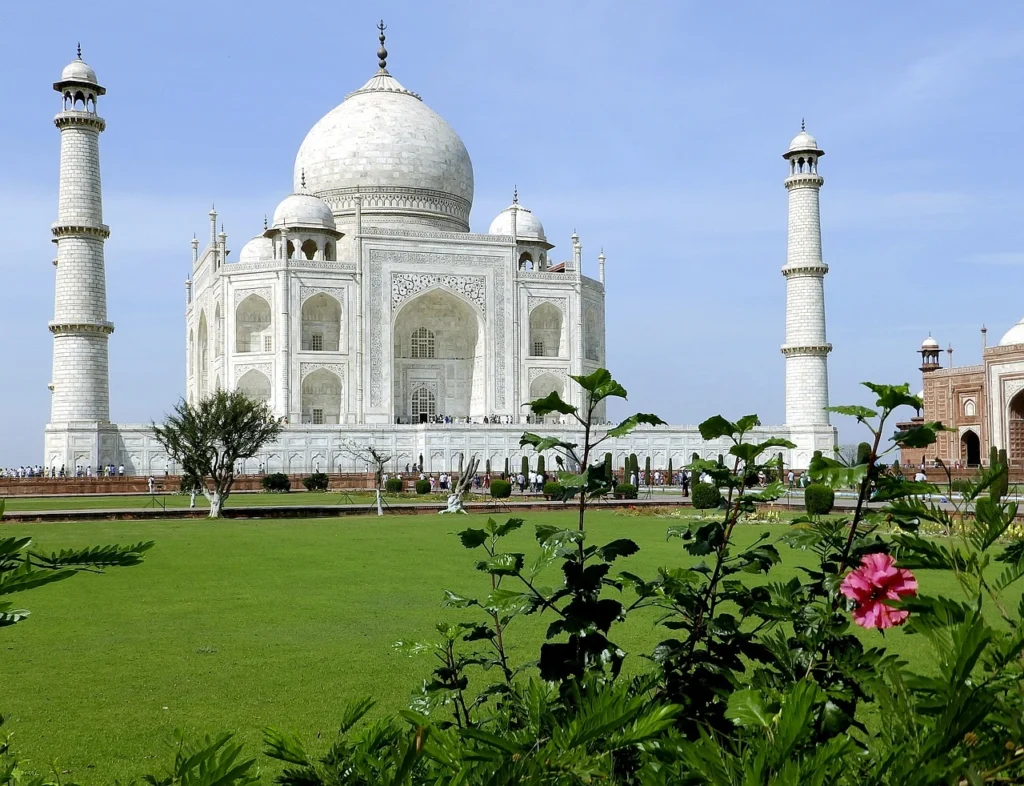
North India delivers grandeur and intensity. Mughal forts, Rajasthan palaces, Varanasi’s ghats, the Taj Mahal at sunrise, these are experiences that hit hard and fast. Cities are loud, markets are dense, and the visual contrast between ancient architecture and modern street chaos is part of the appeal, not an inconvenience. Travellers drawn to epic history, iconic photography, spiritual depth, and desert landscapes belong here. First-timers who want to feel the full sensory force of India will find the North delivers exactly that.

South India runs at a different tempo entirely. Backwater cruises in Kerala, intricate Dravidian temples in Tamil Nadu, coffee plantations in Coorg, boulder-strewn ruins at Hampi, these are slower, more contemplative experiences. The food shifts dramatically from the creamy, wheat-based North to rice, coconut, and tamarind. Many South Indian sites attract far fewer international tourists than the major Golden Triangle landmarks, which means a noticeably different atmosphere on the ground. Travellers drawn to nature, ancient spirituality, beaches, and cultural depth without the intensity of a North Indian city will feel far more at home in the South.

Climate and the Right Window to Visit Each Region

Best Months for North India

Getting the timing wrong on a first India trip is the most common mistake agents make on behalf of their clients. India’s seasons are not uniform, and what works for Rajasthan in November doesn’t automatically apply to Kerala in the same month.

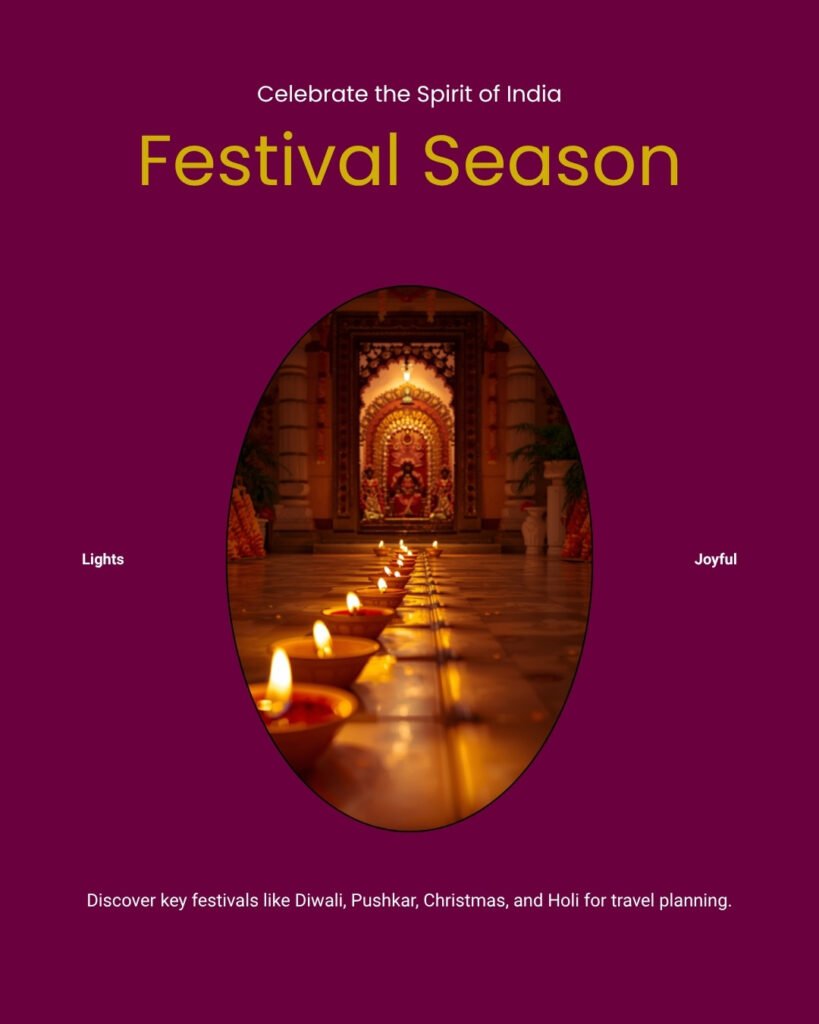
October through March is the golden window for North India. Temperatures across Delhi, Agra, Jaipur, and Rajasthan settle into comfortable sightseeing range, skies stay clear, and the heritage sites show their best face. April through June is punishing, with Rajasthan and the plains regularly hitting 40 to 45 degrees Celsius. July through September brings the monsoon; some parts of Rajasthan turn beautifully green, but travel logistics become complicated. Agents building first-timer itineraries should anchor around the October to March window and, where possible, time around Diwali in October or November, the Pushkar Camel Fair in November, or Holi in March for added experiential value. For planners who want a practical calendar, see this guide to the best time to visit Northern India.

Best Months for South India

South India offers a more forgiving climate overall, but it comes with its own caveats. November through early March is the most comfortable window for Kerala, Tamil Nadu, and Karnataka. December and January are particularly pleasant for temple circuits and backwater cruises. The southwest monsoon hits Kerala hard from June through September, making houseboat cruises and coastal travel less appealing. The key difference from the North is that South India’s tropical climate means heat and humidity are present year-round; the question is managing the rain rather than escaping extreme temperatures.

Signature Highlights First-Timers Actually Remember

In India, the iconic sites genuinely earn their reputation, and it’s worth knowing which ones land most powerfully with first-time visitors before building any itinerary around them.

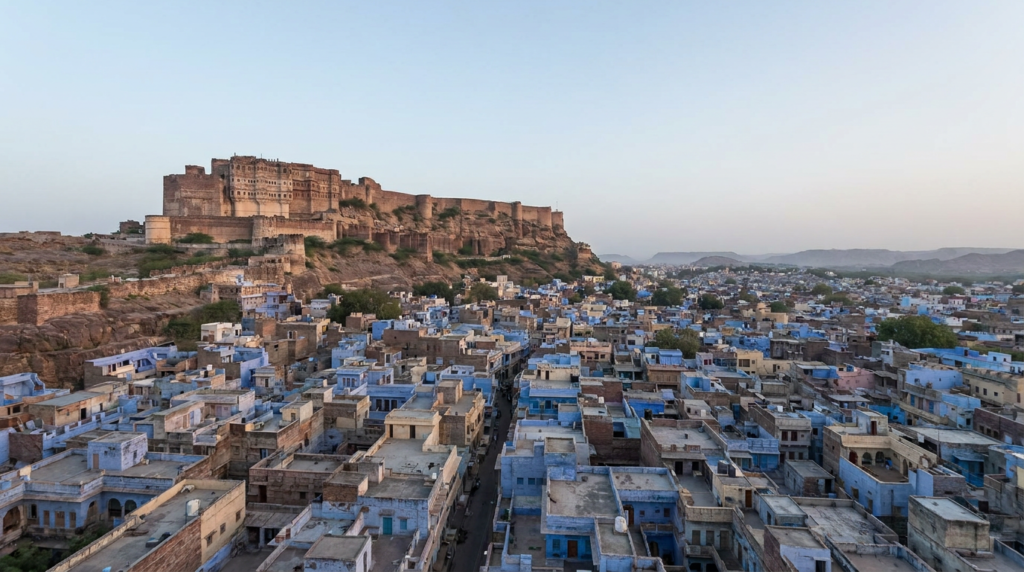
In North India, the Golden Triangle anchors every first itinerary for good reason. Old Delhi’s Red Fort and Chandni Chowk, the Taj Mahal at sunrise in Agra, and Jaipur’s Amber Fort form a logical, manageable circuit that covers Mughal grandeur and Rajput heritage in a single arc. Varanasi adds a spiritual dimension no other city on earth replicates: the Ganga Aarti ceremony, a sunrise boat ride past the cremation ghats, and the narrow alleys of the old city deliver an experience travellers talk about for years. For those with more time, Rajasthan extends naturally into Jodhpur’s blue-city streets, Jaisalmer’s desert fort, and Udaipur’s lake palaces.

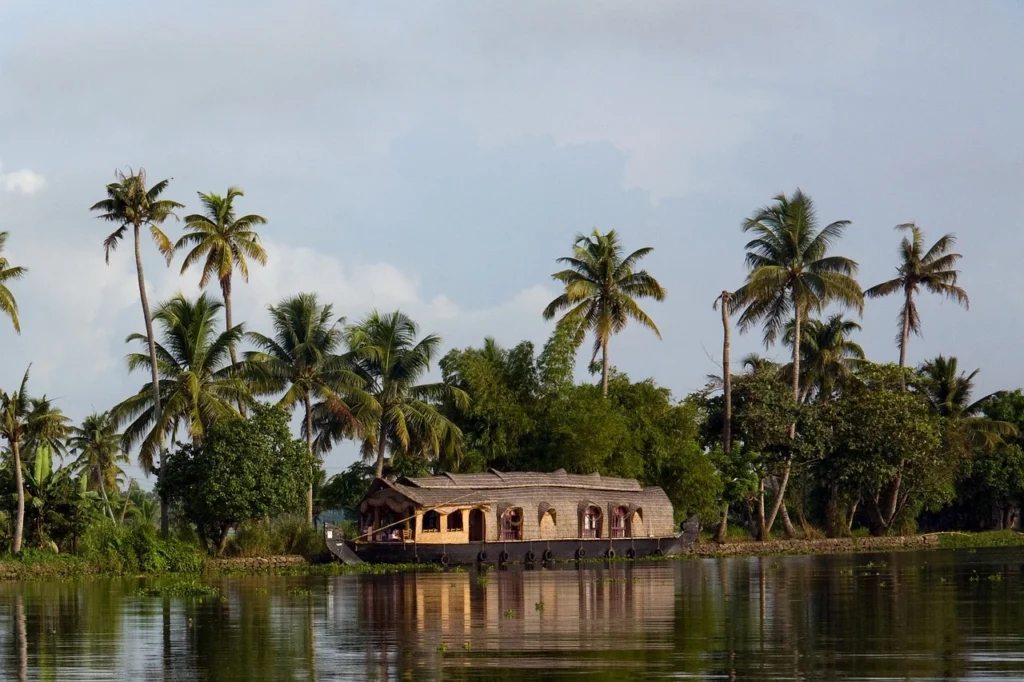
South India’s signature moments are equally powerful but require more intentional planning. Kerala’s backwaters, best experienced on an overnight houseboat from Alleppey, are unlike anything else in India, quiet canals, coconut groves, and village life visible from the water. Tamil Nadu’s temple circuit rewards travellers who engage seriously with Dravidian architecture: Mahabalipuram’s Shore Temple on the Bay of Bengal, the towering gopurams of Madurai’s Meenakshi Temple, and Thanjavur’s Brihadeeswarar Temple are among the most architecturally impressive sites on the subcontinent. For a broader read on how the regions differ in culture and cuisine, see this piece comparing North vs South India: contrasting traditions, cuisine, and culture. Karnataka rounds out a full South India itinerary with Hampi’s surreal boulder-strewn ruins and the opulent Mysore Palace.

First-Timer Itineraries: How to Use 7, 10, or 14 Days

Trip length is the single biggest constraint in first-timer planning. The temptation to combine North and South India in one trip is understandable but almost always results in an exhausted client who has seen airports more than destinations. Here is how to structure each duration realistically.

For 7 days, a single-region focus is the only approach that works. A North India 7-day itinerary runs cleanly: two days in Delhi, a day in Agra with sunrise at the Taj Mahal and an onward drive to Jaipur, two days in Jaipur covering Amber Fort and the old city, an optional Pushkar day trip, and a return to Delhi for departure. A South India 7-day itinerary works equally well starting in Chennai: Mahabalipuram on day two, Pondicherry on day three, the Trichy and Madurai temple circuit across days four and five, Periyar wildlife reserve on day six, and a departure from Kochi on day seven. Both itineraries are tight but manageable with private vehicles and no wasted transit days.

At 10 days, North India comfortably absorbs Jodhpur or Varanasi after the Golden Triangle base without feeling rushed. A 10-day South India trip extends naturally to Kerala’s backwaters and Munnar tea plantations after the Tamil Nadu temple circuit. At 14 days, both regions open up significantly. North India can layer in Udaipur, a Ranthambore tiger safari, or even Ladakh for adventure-oriented travellers. South India opens up to a full Karnataka, Tamil Nadu, and Kerala circuit including Hampi, Mysore, and Alleppey. Fourteen days is the threshold where India starts to reveal itself rather than just impress from a distance.

Getting Around: Logistics, Distances, and Pacing Reality

First-time international travellers consistently underestimate India’s scale. The country is not small, roads are not always fast, and train delays are a reality that needs to be built into every itinerary, buffer days and flexible connections matter more here than in many other destinations. Honest pacing advice here prevents the most common client complaints.

North India’s Golden Triangle is road-trip territory. Delhi to Agra runs roughly 3 to 4 hours by express train or car; Agra to Jaipur takes another 4 to 5 hours by road. Private drivers with a fixed daily rate, typically in the range of USD 40 to 60 per day, give itinerary flexibility that trains and buses simply don’t offer, especially for Rajasthan’s heritage sites spread across smaller towns. Once the itinerary extends to Varanasi, Jodhpur, or Ladakh, domestic flights become the smart choice. Routes are well-served, fares are reasonable when booked in advance, and the alternative of a 12-plus-hour train to Varanasi is rarely the right call for a first-timer on a tight schedule.

Chennai, Kochi, and Bengaluru are all well connected by domestic flights, making it practical to fly between hubs rather than endure long overland drives across South India. Within Kerala and Tamil Nadu, private vehicles are the most efficient way to move between temples, hill stations, and backwaters. Many operators report that certain South Indian rail routes are perceived as reliable and offer some genuinely scenic journeys, including the Nilgiri Mountain Railway from Mettupalayam to Ooty, which is worth building into a 14-day itinerary. A direct flight from Delhi to Kochi runs around 3 hours and 10 minutes, making a combined North-South itinerary logistically feasible at 14 days if the routing is disciplined.

How Travel Agents Design Region-Specific Itineraries Without the Guesswork

Travel agents who work on India regularly know that North India and South India require fundamentally different supplier networks, seasonal planning logic, and pacing structures. An agent who handles both regions generically, pulling from a single India playbook, is working harder and delivering less than one who partners with a group tour operator in India embedded in regional logistics.

The first step is qualifying the client properly before any itinerary is drafted. Clients who arrive with “I want to see India” need to be guided toward a specific regional match based on their travel style, trip length, and travel dates. That conversation, handled well, is what separates a travel advisor from a booking engine. The region match determines the supplier relationships needed, the seasonal pricing windows, and the on-ground support requirements. For many advisors, recommending targeted small group tours or private options based on client tolerance for crowds is an effective way to translate those preferences into concrete itineraries.

India Travel Etc, a Ministry of Tourism-recognised DMC based in Jaipur with 15 years of on-ground experience, works directly with international travel agencies and tour operators to design region-specific itineraries tailored to each client’s profile. From Golden Triangle circuits to South India temple and backwater routes, the team aims to deliver fully costed proposals within 24 to 48 hours, with direct hotel contracting and a dedicated single point of contact throughout every program. For agents selling India, having a specialist DMC handle the regional complexity means faster quoting, cleaner logistics, and a stronger foundation for clients who want to return. If you’d like a streamlined starting point, Create Your Customized Trip to India with the team’s templated frameworks and bespoke options.

Making the Call: Which Region Is Right for Your Client

Choosing where to travel in North or South India for a first-time visitor isn’t a question with a universal answer. It’s a solvable problem once the right filters are applied. North India rewards travellers chasing history, architectural grandeur, and spiritual intensity. South India rewards those drawn to nature, Dravidian temple culture, backwater landscapes, and a gentler pace. Both regions are spectacular and first-timer-friendly with the right planning. The mistake is treating them as interchangeable.

The three decision factors are travel style, trip length, and season. Run every first-timer inquiry through those three filters before building an itinerary. A 7-day trip in October goes to North India’s Golden Triangle. A 14-day trip in December can go South for a full Karnataka, Tamil Nadu, and Kerala circuit, or North for an extended Rajasthan loop. A traveller who dislikes crowds and loves nature belongs in the South. A traveller who wants the Taj Mahal and Varanasi in the same trip belongs in the North.

If you’re a travel agent building India programs and want a tailored proposal without starting from scratch, the team at India Travel Etc is set up to turn around a fully costed, region-specific itinerary quickly. Reach out with your client’s travel style, dates, and trip length, and let the specialists handle the rest. For additional tips on avoiding common pitfalls, see this roundup of mistakes first-time travellers make in India and how to dodge them like a local.

India’s Top Luxury Travel Experiences for High-End Clients

Kerala Luxury Beach Front Villa

If you’ve been wondering what the best luxury travel experiences in India are for high-net-worth clients, the answer has changed significantly over the past decade. India has quietly become one of the world’s most compelling luxury destinations, with high-end travelers from the United States, Europe, and Australia no longer treating it as a once-in-a-lifetime adventure.

Industry observers across the inbound travel sector note a clear shift: repeat visits are longer, spend per trip is higher, and client expectations have moved well beyond the Golden Triangle. The gap between a generic India tour and a genuinely curated one is enormous, and that gap is precisely where the right ground DMC partner in India makes or breaks the sale.

This guide covers the five experiential pillars of high-end India travel: palace stays, private tiger safaris, luxury trains and Kerala houseboats, Himalayan wellness retreats, and how to structure an India itinerary that layers them intelligently. You’ll find property recommendations, realistic price bands, seasonal guidance, and two sample frameworks you can adapt for your clients right now.

1. The timeless allure of Rajasthan’s palace hotels

A palace hotel is not simply a luxury hotel with ornate architecture. The difference is felt the moment your client arrives: a private welcome with flower garlands and cold rose water, a butler who knows their name before they reach the reception desk, and dinner served in a candlelit courtyard that was entertaining maharajas three hundred years ago. For many experienced travel advisors, a genuine palace stay is one of the most effective tools for converting a high-net-worth prospect into a confirmed India booking.

The gold-standard trio in Rajasthan remains Rambagh Palace in Jaipur, Taj Lake Palace in Udaipur, and Umaid Bhawan in Jodhpur. Taj Lake Palace sits on a marble island in Lake Pichola, delivering water-view drama and hand-painted suites that photograph beautifully. Rambagh offers Mughal gardens, polo grounds, and butler service on a scale few properties anywhere can match. Umaid Bhawan is partly still owned by the royal family of Jodhpur, giving the property an authenticity that no amount of renovation can manufacture.

For clients who want heritage without the formal grandeur of a Taj or Oberoi property, RAAS Jodhpur is the boutique alternative worth recommending. Positioned at the base of Mehrangarh Fort, it fuses old-city character with contemporary design and draws the younger luxury traveler who values substance over ceremony.

Oberoi Udaivilas suits the architectural purist: Mewar-inspired interiors are precise, lake views are framed from every room, and the property carries a well-established reputation for exceptional service standards.

Palace stays work best when the itinerary builds experiences around them. A private sunrise city tour, a rooftop dinner with live folk performance, or an early morning walk through the palace gardens before other guests wake: these additions transform a hotel booking into something your client will talk about for years.

This is where an itinerary moves from booked to genuinely bespoke.

2. What are the best luxury safari experiences in India?

India has more wild tigers than any other country on Earth, and the reserves in Madhya Pradesh and Rajasthan rank among the most productive wildlife destinations in Asia. Ranthambore, Bandhavgarh, and Kanha are not interchangeable. Each has a different character, terrain, and lodge landscape. Understanding the distinction separates a knowledgeable advisor from one who simply sends a client to “a safari in India.”

Bandhavgarh consistently delivers the highest tiger density and the most dramatic close-range sightings. Plan three nights and six game drives to cover the core zones properly. Ranthambore’s open terrain suits clients who prefer longer-range views of tigers near waterholes; two to three nights covers the prime zones well. For the best tiger sighting odds, Bandhavgarh is the stronger recommendation. For iconic landscapes and the historic fort backdrop, Ranthambore is hard to beat.

On the accommodation side, Six Senses Fort Barwara near Ranthambore is the property to know. It’s a restored 14th-century Rajput fort combining heritage stays with direct safari access. Transfer times from spa to park gate vary, but guests typically reach the forest in well under an hour.

Aman-i-Khas offers pure tented camp luxury: six pavilions in a private reserve, personal naturalists, and the kind of stillness that only a canvas ceiling and a jungle soundtrack can provide. Private safari packages at premium lodges typically run $500 to $800 per person per day, all-inclusive.

The most compelling itinerary pairing for a first-time India traveler combines three to four nights at a Madhya Pradesh wildlife lodge with four to five nights of palace stays in Rajasthan. This combination addresses the common client hesitation about “too much sightseeing.” The safari grounds the trip emotionally, the palaces deliver the visual drama, and the result is a client who books again.

3. Moving through India in style: luxury trains

The Maharajas’ Express and the Palace on Wheels are not simply modes of transport. They are curated journeys with fine dining, personal attendants, cultural excursions to forts and desert villages, and an onboard atmosphere that makes clients feel like guests of a traveling royal court.

The practical difference between the two is worth knowing, see a detailed Palace on Wheels vs Maharajas’ Express comparison. The Maharajas’ Express operates seasonally with multiple themed itineraries spanning Rajasthan, Central India, and beyond, with routes running three to seven nights and prices from $7,000 to $15,000 per person for a full journey. The Palace on Wheels runs a fixed seven-night Rajasthan loop, priced more accessibly at $4,500 to $6,600 per person. Both operate October through March.

For clients who hesitate over the price, the positioning is straightforward: the train solves the logistics problem entirely. No airport transfers, no early morning departures, no check-in queues. They wake up in a moving palace, eat a prepared breakfast, and step off at Ranthambore or Udaipur for a private excursion.

For travel advisors, these journeys tend to be a strong upsell in the India product portfolio once a client has seen the visuals.

4. Kerala’s Backwaters

Kerala’s luxury houseboats offer an entirely different India. The backwaters are a world of palm-fringed canals, village fishing communities, fresh seafood prepared on deck, and sunsets that arrive slowly over still water.

A private luxury houseboat on the backwaters frequently turns out to be the experience that surprises clients most, particularly those who thought they already understood India. Premium vessels include private butlers, Ayurvedic meals, and sun decks fitted with loungers and lighting.

Prices for a premium vessel run $500 to $1,200 per day. Plan this experience between November and March, when the weather is dry, cool, and consistently beautiful. See an example with the Spice Routes luxury houseboat in Kerala.

5. Himalayan wellness retreats and mountain sanctuaries

Ananda in the Himalayasa is the reference point for luxury wellness in India. Built on a former maharaja’s estate above Rishikesh, overlooking the Ganges valley, it combines one of India’s most respected Ayurvedic programs with a heritage property setting that wellness resorts elsewhere struggle to replicate.

Signature packages include personalized Ayurvedic therapies, daily yoga and meditation, dosha-specific cuisine, and Himalayan trekking. The recommended stay is seven nights for a foundational program, fourteen nights for meaningful physiological change, and twenty-one nights for clients seeking a fully transformative experience.

The client profile for Ananda is specific: high-achieving professionals looking for genuine restoration, not resort leisure. They want structure, qualified practitioners, and results they can feel.

Ananda has earned recognition on leading international wellness and luxury travel rankings, including listings in Condé Nast Traveller’s top wellness retreats, which speaks to the consistency of its offering. October through March offers the clearest skies and most comfortable temperatures in Uttarakhand, though the retreat operates year-round.

For niche-focused advisors, Northeast India is an emerging luxury frontier worth tracking. Assam’s tea estate stays, Meghalaya’s eco-retreats, and Kaziranga National Park, renowned for one-horned rhino safaris, represent a circuit that remains almost entirely off the radar for Western luxury travelers. Properties are limited but exceptional, and the exclusivity factor is a strong selling point for clients who have already done Rajasthan. The best window is October to April.

When to go, what to budget, and how to structure an itinerary

The clearest seasonal guidance for luxury travel in India is this: October to March covers almost everything. Rajasthan, Madhya Pradesh safaris, Himalayan wellness retreats, and Kerala backwaters all fall within this window, which makes trip-building considerably easier than clients often expect. The nuance is that the best India luxury tours layer two or three regions rather than attempting to cover six. Depth beats breadth every time, and clients who slow down are always the ones who return.

Use these price bands as a working framework when briefing clients on what a premium India experience actually costs:

  • Palace stays: $400 to $900 per person per night, depending on property and suite category
  • Private tiger safaris: $500 to $800 per person per day, all-inclusive at premium lodges
  • Luxury train journeys: $600 to $1,000+ per person per day, fully inclusive
  • Kerala luxury houseboats: $500 to $1,200 per vessel per day, private charter

Two itinerary frameworks that work well for high-end clients are the 10-day Rajasthan and Safari Circuit and the 12-day South and North Blend.

The Rajasthan circuit moves through Agra with one night at Oberoi Amar Vilas, Jaipur for two nights at a palace property, Ranthambore for two nights at a luxury jungle lodge, then Udaipur for three nights with private guided transitions between each.

The 12-day blend opens in Delhi for one night, includes Agra and the Taj Mahal on night two, then moves to Jaipur for three nights and finishes in Kerala for three nights on a private houseboat, a wellness retreat in the Kerala highlands for three nights. Both frameworks work because they give clients meaningful contrast: architectural grandeur paired with raw nature, or spiritual depth paired with sensory indulgence.

For advisors who want these frameworks packaged as sellable products, consider our India Luxury Private Tours, which are designed specifically for high-net-worth guests and international operator partners. Multi-region itineraries like these require more than good taste in properties.

They require direct hotel contracting so pricing holds, private drivers with premium vehicles who are briefed and waiting at every transfer point, and someone available at midnight when a flight change creates a ripple through three destinations. That coordination is the operational backbone that turns a well-designed itinerary into a seamless client experience.

Extraordinary experiences demand flawless execution

India’s luxury travel offering is genuinely world-class. The palaces, the wildlife, the trains, the backwaters, the wellness retreats, none of these are overhyped. What varies enormously is the quality of execution around them, and that is where most itineraries succeed or fail. Knowing which suite to book at Taj Lake Palace, which zone to request at Bandhavgarh, which guide to ask for in Ranthambore: that knowledge takes years to develop and cannot be replicated by any booking platform.

For travel advisors asking what the best luxury travel experiences in India look like when delivered well, the answer is always the same: it comes down to the ground partner.

At India Travel Etc, we handle exactly this for our international operator and travel advisor partners. As a Luxury DMC in India based in Jaipur capital of Rajasthan, with direct hotel contracting, multilingual 24/7 operational support, and 15 years of on-ground India experience, we build and execute multi-region luxury itineraries as a dedicated B2B partner. You sell with confidence because we handle the logistics that matter most.

If you’re ready to put together a high-end India proposal for a specific client, reach out to our team today. We typically return a tailored, fully costed itinerary within 24 to 48 hours, with transparent contracting and a single point of contact from first brief to final drop-off. That’s the standard we hold ourselves to, and it’s the standard your clients deserve.