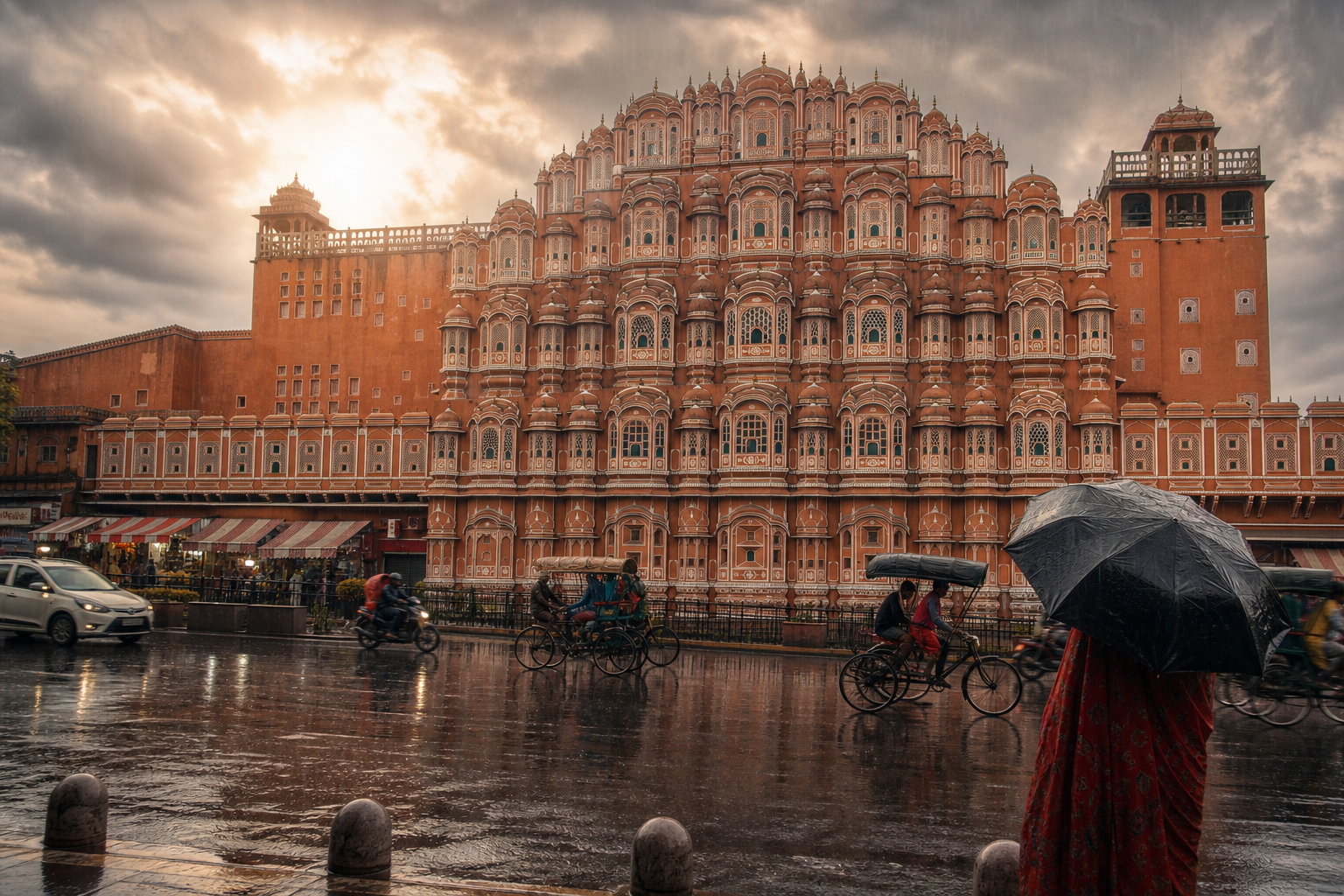
How to Plan an India Trip Around the Monsoon Season
Picture this: a travel agency books clients into Kerala in July, drawn in by the promise of lush, emerald landscapes. What those clients actually experience is three weeks of relentless rain, flooded roads, and an itinerary rewritten on the fly. They come home frustrated. The agency loses the account permanently.
The mistake wasn't choosing India. It was building a program without understanding how India's monsoon actually works — and that mistake is more common than it should be.
Planning an India trip around the monsoon season isn't simply a question of which months to avoid. India's monsoon is a regional, shifting system that rolls across the subcontinent in waves, behaves differently from state to state, and even runs in reverse along parts of the southern coast. Agencies that understand this build programs that hold up. Agencies that don't eventually learn the hard way.
This guide gives travel planners the seasonal framework to do it right.
Step One: Understand What India's Monsoon System Actually Is
Before you can plan around India's monsoon, you need to know what you're dealing with. Most travel planners know India has a monsoon. Fewer know there are two, operating on completely different timelines and affecting entirely different parts of the country.
The Southwest Monsoon: The System That Shapes Most India Programs
The southwest monsoon is the system behind nearly every India travel decision. It makes landfall near Kerala around June 1 each year and sweeps steadily northward. By late June to early July, most of North India — Delhi, Agra, the Rajasthan plains — is under active monsoon conditions. The system dominates from June through September before gradually retreating.
This is the pattern that shapes the travel calendar for the majority of India's most popular circuits.
The Northeast Monsoon: The Planning Variable Most Agencies Miss
Here is where programs regularly go wrong. While the rest of India is drying out in October, Tamil Nadu and the southeast coastal strip are entering their main rain season. The northeast monsoon delivers sustained rainfall to Chennai, Pondicherry, and surrounding areas in October and November.
An agency that books a South India circuit in October — assuming the worst is behind them — may still be walking clients straight into difficult weather. South India follows a different monsoon calendar than the north, and for anyone building India programs, that distinction is not optional knowledge.
Step Two: Identify the Right Travel Window for Each Region
Once both monsoon systems are mapped, you can start identifying workable windows — not as a single date range, but as a region-by-region assessment.
October to March: The Broadest Safe Window Across India
For most India circuits, the post-monsoon dry period runs from October through March. During the winter months of November through February, temperatures across Rajasthan and North India settle into a comfortable 16 to 27°C range. South India stays warm and pleasant without the humidity of the monsoon.
This is India's peak travel season, and the weather logic behind that designation is straightforward. What comes with it is equally predictable: higher hotel rates, tighter availability, and real pressure around major festivals and the Christmas–New Year window. For agencies planning programs in this window, advance contracting is essential — for properties in Jaipur, Udaipur, or Goa, six months ahead is often the minimum.
April and Early October: Shoulder Months Worth Considering
April sits comfortably pre-monsoon, making it a workable planning option for North India and Rajasthan before summer heat climbs steeply. Rates in Rajasthan during April typically run 20 to 30 percent below peak December pricing, with considerably better availability — a meaningful advantage for agencies building value-driven programs.
Early October sits in the monsoon retreat window: North India is largely clearing up, but coastal areas and the south remain damp. For agencies routing clients carefully through this period, the value is genuine, provided the itinerary stays away from the coast and South India.
Step Three: Plan by Region, Not by Season
A blanket 'avoid June through September' rule only takes program planning so far. The more accurate approach is reading each destination's seasonal calendar individually.
| Region | Best Window | Avoid |
|---|---|---|
| Rajasthan & North India | October–March (April viable) | July–August (peak rain) |
| Kerala & South-West | December–March | June–November (two rain windows) |
| Tamil Nadu (SE coast) | June–September (drier here) | October–November (NE monsoon) |
| Ladakh & Spiti | June–September (rain shadow) | Deep winter (passes closed) |
Rajasthan and North India: The Desert Advantage
Rajasthan does receive monsoon rain — Jaipur records around 161 mm in July and 172 mm in August — but the Thar Desert geography means shorter, less disruptive events compared to coastal and tropical regions. The October through March window is the definitive sweet spot for the Golden Triangle and heritage circuit: clear skies, comfortable temperatures, and the full landscape performing at its best.
Advance booking for December is non-negotiable. Properties in Jaipur, Udaipur, and Jodhpur sell out weeks or months ahead during the Christmas–New Year peak, and rates reflect that demand. April still works well in Rajasthan before pre-summer heat becomes a real deterrent.
Kerala and South India: Two Monsoon Windows, One Narrow Dry Season
Kerala is one of India's wettest regions during the southwest monsoon. Monthly rainfall near Kochi from June through September runs between 435 mm and 813 mm — genuinely difficult conditions for most leisure travelers. The southwest monsoon withdraws from Kerala in mid-October, but the northeast monsoon then delivers another round of rain through November.
The comfortable, dry planning window for Kerala is narrower than most agencies assume: roughly December through March. Tamil Nadu inverts this pattern entirely, with its main rainfall arriving in October and November and a comparatively drier stretch from June through September. Agencies building South India programs need to think by state, not by season.
The Himalayas: A Completely Separate Calendar
Himalayan routes require their own planning framework. High-altitude passes open after spring snow clearance — typically May for the Manali–Leh highway — and close again by late October or November as snow returns. July and August bring the wettest Himalayan conditions below the monsoon line.
Above it, in Ladakh and Spiti, the weather calculus changes considerably. June through September works for high-altitude routes, October and May are viable shoulder windows, and deep winter is off-limits for most standard programs outside of specialized expeditions.
Step Four: Build Monsoon-Proof Alternatives for Summer Clients
Some clients are locked into summer travel dates. When that's the case, the planning question shifts: not whether to send them to India, but where in India still delivers a strong program despite the monsoon.
Ladakh: India's Rain-Shadow Escape
Ladakh is the most dependable dry-weather option in India during the monsoon months. While Kochi records over 780 mm of rain in June and Mumbai tops 520 mm in the same month, Leh sees just 4 mm in June, 15 mm in July, and 15 mm in August. The region sits in the Himalayan rain shadow, and its primary accessible window — June through September — aligns almost exactly with the southwest monsoon hammering the rest of the country.
| Location | Approx. June rainfall |
|---|---|
| Leh (Ladakh) | 4 mm |
| Mumbai | 520+ mm |
| Kochi (Kerala) | 780+ mm |
For agencies placing clients in summer, a Leh–Ladakh or Spiti Valley itinerary is the most operationally sound dry-weather solution available. One caveat worth flagging: approach roads can face landslide disruptions even when Ladakh's valleys stay dry, so real-time on-ground monitoring from a reliable DMC partner matters here more than any map.
Western Rajasthan's Desert Belt
The Thar Desert region around Jodhpur, Jaisalmer, and Bikaner receives minimal monsoon impact relative to most of the subcontinent. Brief showers are the norm, not sustained downpours, and the desert absorbs them quickly. For agencies building summer India programs, pairing the Rajasthan desert belt with a Ladakh circuit is one of the strongest monsoon-avoidance combinations available — and the geographic contrast it creates consistently resonates with international clients.
Step Five: Account for Festival Peaks Inside the Dry Window
Getting the seasonal window right is one part of the planning picture. Knowing when demand surges within that window — and how that affects pricing and availability — is the other.
Diwali, Christmas, and New Year: Book Early or Pay More
Diwali — falling in October or November depending on the year — kicks off the festive season and drives demand sharply across Rajasthan and North India. Christmas and New Year create another major surge, particularly for luxury properties in Jaipur, Udaipur, and Goa. Based on India Travel Etc's historical booking trends, December is consistently the most expensive month in Rajasthan, with top properties selling out weeks or months in advance.
For clients with flexible budgets who want to experience the festival season directly, this timing is compelling. For clients on tighter budgets, routing programs into the quieter post-January window saves considerably without giving up weather quality.
Holi and the Spring Shoulder: Strong Value, Good Weather
Holi, typically in February or March, is one of India's most photographed cultural events and a genuine draw for international travelers. The weeks around it create localized demand spikes, but the broader February–March window is among the best-value periods of the dry season. Weather is still comfortable, crowds are well past their December peak, and properties carry significantly better availability than during the Christmas rush. For agencies building value-driven India programs with a strong cultural angle, this shoulder period consistently delivers the most complete package.
Why Seasonal Planning Requires More Than a Calendar
A rainfall chart by month is a starting point. It is not a travel strategy.
Real seasonal planning for India accounts for route-specific conditions, property-level booking windows, and on-ground exceptions — not just monthly averages. Knowing that October is broadly safe for North India doesn't tell you that a specific routing through Kerala is still damp, that a heritage property in Jodhpur requires six-month advance contracting for December, or that Ladakh approach roads can close two weeks ahead of their typical schedule after an early snowfall. This depth of operational knowledge lives with on-ground partners, not in generic guides.
At India Travel Etc, we work directly with international travel agencies and tour operators to build itineraries that hold up against India's seasonal realities — accounting for regional monsoon timings, route-specific weather patterns, and traveler profiles from the ground up. We handle contracting and logistics across all travel seasons, typically with a 24 to 48-hour quote turnaround, so seasonal planning becomes an operational edge rather than a liability. Whether an agency needs a well-timed Rajasthan circuit in November, a Ladakh alternative for summer clients, or a South India routing that sidesteps both monsoon windows, we bring 15 years of India-specific, on-ground expertise that our trade partners rely on, season after season.
Frequently Asked Questions
How do you plan an India trip around the monsoon season?
Start by mapping the two monsoon systems: the southwest monsoon (June–September, affecting most of India) and the northeast monsoon (October–November, affecting Tamil Nadu and southeast coastal areas). Then plan destination by destination rather than applying a single national window. October through March covers most circuits safely. For summer-locked clients, Ladakh and western Rajasthan are the most reliable dry-weather options.
Which regions of India are safe to visit during the monsoon season?
Ladakh receives just 4 to 15 mm of rain per month from June through September — a fraction of what coastal cities see — making it India's best monsoon-season destination. Western Rajasthan's desert belt around Jodhpur, Jaisalmer, and Bikaner also experiences only brief showers during the same period. Both work as solid summer program options when other parts of India are under active monsoon conditions.
When does the monsoon end in India?
The southwest monsoon retreats from North India by late September, with most of the country dry again by early October. However, the northeast monsoon then arrives in Tamil Nadu and the southeast coast, running through November. Kerala clears by mid-October but is followed immediately by northeast monsoon influence. For most South India programs, December is the practical start of the reliable dry window.
What is the best time to plan a Rajasthan trip?
October through March is Rajasthan's optimal travel window: clear skies, comfortable temperatures, and the heritage circuit performing at its best. December carries the highest prices and tightest availability, particularly around Jaipur, Udaipur, and Jodhpur. April is viable before summer heat climbs. For agencies with budget-conscious clients, February and March offer excellent weather with significantly lower rates than December.
How far in advance should India programs be contracted?
For peak December travel to Rajasthan and Goa, six months' advance contracting is often required for preferred properties. Shoulder months like April and late January offer considerably more flexibility. For Ladakh summer programs, early booking is equally important given limited accommodation inventory at altitude. Festival periods — Diwali, Holi, Christmas–New Year — all warrant earlier action than the surrounding dates.
Plan India Programs That Hold Up Against Every Season
India's monsoon calendar rewards the agencies that plan around it properly, and it reliably exposes those that don't. The southwest monsoon, the northeast monsoon, the Himalayan snow calendar, and the desert belt's relative immunity together create a layered planning picture that no single travel season can capture in full.
For travel agencies and tour operators who want India programs that perform — across seasons, regions, and client budgets — India Travel Etc brings 15 years of India-specific on-ground expertise, direct supplier relationships across every circuit, and route-specific seasonal intelligence built through real operational experience.