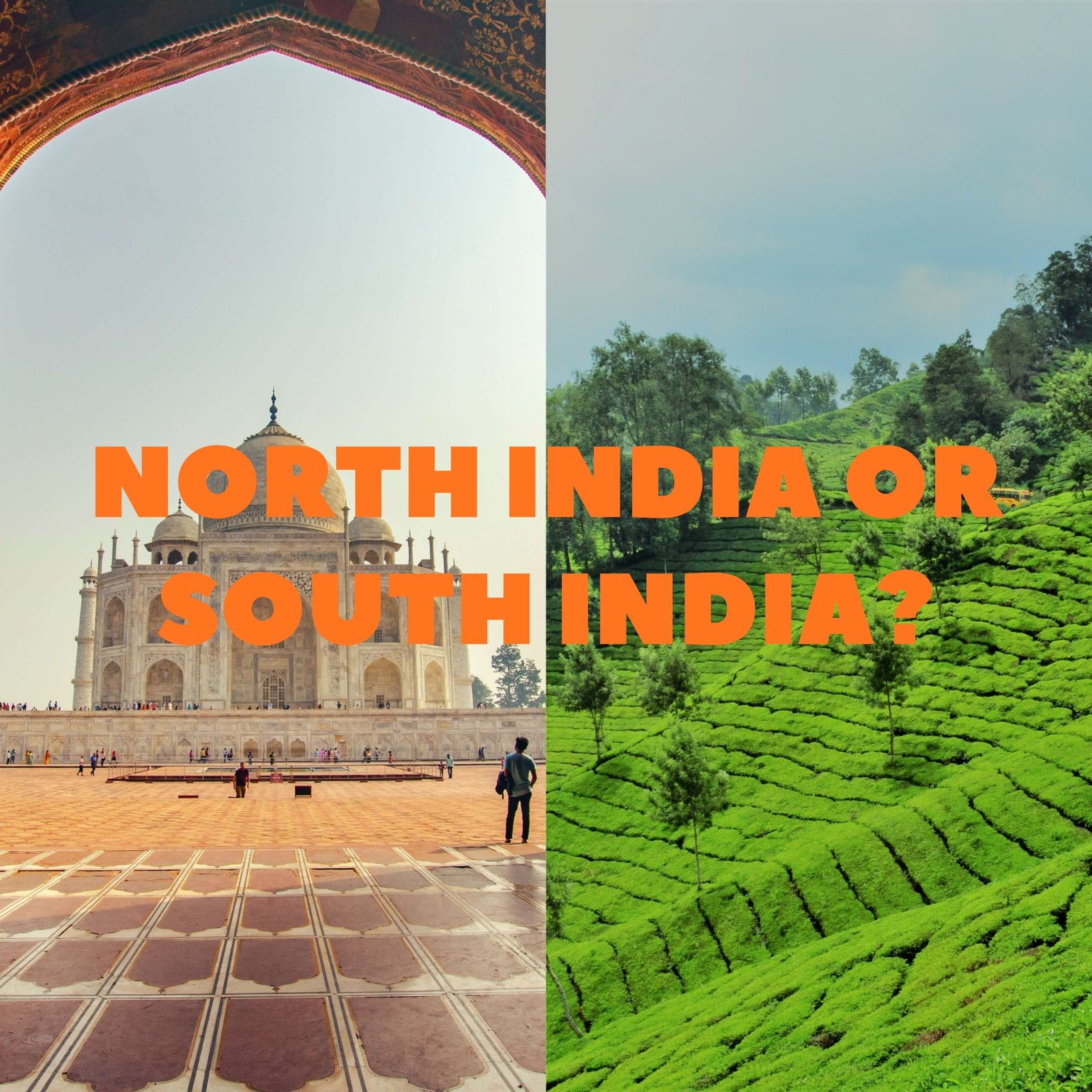
Deciding where to travel in North or South India for a first-time visitor is one of the most common questions India specialists hear, at least once a week, sometimes more. It comes from travel agents with clients who have two weeks, a strong sense of wanderlust, and a Pinterest board full of contradictory images: the Taj Mahal, Kerala houseboats, Rajasthan forts, temple gopurams. Both regions deliver. But they deliver completely different experiences, and sending the wrong traveller to the wrong region is a fast track to a disappointed client who never returns to India.
At India Travel Etc, we field this question from international tour operators and travel advisors constantly, especially when clients have 7 to 14 days and big ideas that haven't been filtered yet. The right answer depends on three things: travel style, available time, and the season they're travelling in. This guide walks through each factor so you can make a confident call before drafting a single itinerary.
North vs. South India at a Glance: Matching the Region to the Traveller
The most useful starting point isn't a list of sights. It's the traveller's personality and what kind of experience they're actually chasing. North India and South India aren't just different destinations; they're different emotional registers.
North India delivers grandeur and intensity. Mughal forts, Rajasthan palaces, Varanasi's ghats, the Taj Mahal at sunrise, these are experiences that hit hard and fast. Cities are loud, markets are dense, and the visual contrast between ancient architecture and modern street chaos is part of the appeal, not an inconvenience. Travellers drawn to epic history, iconic photography, spiritual depth, and desert landscapes belong here. First-timers who want to feel the full sensory force of India will find the North delivers exactly that.
South India runs at a different tempo entirely. Backwater cruises in Kerala, intricate Dravidian temples in Tamil Nadu, coffee plantations in Coorg, boulder-strewn ruins at Hampi, these are slower, more contemplative experiences. The food shifts dramatically from the creamy, wheat-based North to rice, coconut, and tamarind. Many South Indian sites attract far fewer international tourists than the major Golden Triangle landmarks, which means a noticeably different atmosphere on the ground. Travellers drawn to nature, ancient spirituality, beaches, and cultural depth without the intensity of a North Indian city will feel far more at home in the South.
Climate and the Right Window to Visit Each Region
Best Months for North India
Getting the timing wrong on a first India trip is the most common mistake agents make on behalf of their clients. India's seasons are not uniform, and what works for Rajasthan in November doesn't automatically apply to Kerala in the same month.
October through March is the golden window for North India. Temperatures across Delhi, Agra, Jaipur, and Rajasthan settle into comfortable sightseeing range, skies stay clear, and the heritage sites show their best face. April through June is punishing, with Rajasthan and the plains regularly hitting 40 to 45 degrees Celsius. July through September brings the monsoon; some parts of Rajasthan turn beautifully green, but travel logistics become complicated. Agents building first-timer itineraries should anchor around the October to March window and, where possible, time around Diwali in October or November, the Pushkar Camel Fair in November, or Holi in March for added experiential value. For planners who want a practical calendar, see this guide to the best time to visit Northern India.
Best Months for South India
South India offers a more forgiving climate overall, but it comes with its own caveats. November through early March is the most comfortable window for Kerala, Tamil Nadu, and Karnataka. December and January are particularly pleasant for temple circuits and backwater cruises. The southwest monsoon hits Kerala hard from June through September, making houseboat cruises and coastal travel less appealing. The key difference from the North is that South India's tropical climate means heat and humidity are present year-round; the question is managing the rain rather than escaping extreme temperatures.
Signature Highlights First-Timers Actually Remember
In India, the iconic sites genuinely earn their reputation, and it's worth knowing which ones land most powerfully with first-time visitors before building any itinerary around them.
In North India, the Golden Triangle anchors every first itinerary for good reason. Old Delhi's Red Fort and Chandni Chowk, the Taj Mahal at sunrise in Agra, and Jaipur's Amber Fort form a logical, manageable circuit that covers Mughal grandeur and Rajput heritage in a single arc. Varanasi adds a spiritual dimension no other city on earth replicates: the Ganga Aarti ceremony, a sunrise boat ride past the cremation ghats, and the narrow alleys of the old city deliver an experience travellers talk about for years. For those with more time, Rajasthan extends naturally into Jodhpur's blue-city streets, Jaisalmer's desert fort, and Udaipur's lake palaces.
South India's signature moments are equally powerful but require more intentional planning. Kerala's backwaters, best experienced on an overnight houseboat from Alleppey, are unlike anything else in India, quiet canals, coconut groves, and village life visible from the water. Tamil Nadu's temple circuit rewards travellers who engage seriously with Dravidian architecture: Mahabalipuram's Shore Temple on the Bay of Bengal, the towering gopurams of Madurai's Meenakshi Temple, and Thanjavur's Brihadeeswarar Temple are among the most architecturally impressive sites on the subcontinent. For a broader read on how the regions differ in culture and cuisine, see this piece comparing North vs South India: contrasting traditions, cuisine, and culture. Karnataka rounds out a full South India itinerary with Hampi's surreal boulder-strewn ruins and the opulent Mysore Palace.
First-Timer Itineraries: How to Use 7, 10, or 14 Days
Trip length is the single biggest constraint in first-timer planning. The temptation to combine North and South India in one trip is understandable but almost always results in an exhausted client who has seen airports more than destinations. Here is how to structure each duration realistically.
For 7 days, a single-region focus is the only approach that works. A North India 7-day itinerary runs cleanly: two days in Delhi, a day in Agra with sunrise at the Taj Mahal and an onward drive to Jaipur, two days in Jaipur covering Amber Fort and the old city, an optional Pushkar day trip, and a return to Delhi for departure. A South India 7-day itinerary works equally well starting in Chennai: Mahabalipuram on day two, Pondicherry on day three, the Trichy and Madurai temple circuit across days four and five, Periyar wildlife reserve on day six, and a departure from Kochi on day seven. Both itineraries are tight but manageable with private vehicles and no wasted transit days.
At 10 days, North India comfortably absorbs Jodhpur or Varanasi after the Golden Triangle base without feeling rushed. A 10-day South India trip extends naturally to Kerala's backwaters and Munnar tea plantations after the Tamil Nadu temple circuit. At 14 days, both regions open up significantly. North India can layer in Udaipur, a Ranthambore tiger safari, or even Ladakh for adventure-oriented travellers. South India opens up to a full Karnataka, Tamil Nadu, and Kerala circuit including Hampi, Mysore, and Alleppey. Fourteen days is the threshold where India starts to reveal itself rather than just impress from a distance.
Getting Around: Logistics, Distances, and Pacing Reality
First-time international travellers consistently underestimate India's scale. The country is not small, roads are not always fast, and train delays are a reality that needs to be built into every itinerary, buffer days and flexible connections matter more here than in many other destinations. Honest pacing advice here prevents the most common client complaints.
North India's Golden Triangle is road-trip territory. Delhi to Agra runs roughly 3 to 4 hours by express train or car; Agra to Jaipur takes another 4 to 5 hours by road. Private drivers with a fixed daily rate, typically in the range of USD 40 to 60 per day, give itinerary flexibility that trains and buses simply don't offer, especially for Rajasthan's heritage sites spread across smaller towns. Once the itinerary extends to Varanasi, Jodhpur, or Ladakh, domestic flights become the smart choice. Routes are well-served, fares are reasonable when booked in advance, and the alternative of a 12-plus-hour train to Varanasi is rarely the right call for a first-timer on a tight schedule.
Chennai, Kochi, and Bengaluru are all well connected by domestic flights, making it practical to fly between hubs rather than endure long overland drives across South India. Within Kerala and Tamil Nadu, private vehicles are the most efficient way to move between temples, hill stations, and backwaters. Many operators report that certain South Indian rail routes are perceived as reliable and offer some genuinely scenic journeys, including the Nilgiri Mountain Railway from Mettupalayam to Ooty, which is worth building into a 14-day itinerary. A direct flight from Delhi to Kochi runs around 3 hours and 10 minutes, making a combined North-South itinerary logistically feasible at 14 days if the routing is disciplined.
How Travel Agents Design Region-Specific Itineraries Without the Guesswork
Travel agents who work on India regularly know that North India and South India require fundamentally different supplier networks, seasonal planning logic, and pacing structures. An agent who handles both regions generically, pulling from a single India playbook, is working harder and delivering less than one who partners with a group tour operator in India embedded in regional logistics.
The first step is qualifying the client properly before any itinerary is drafted. Clients who arrive with "I want to see India" need to be guided toward a specific regional match based on their travel style, trip length, and travel dates. That conversation, handled well, is what separates a travel advisor from a booking engine. The region match determines the supplier relationships needed, the seasonal pricing windows, and the on-ground support requirements. For many advisors, recommending targeted small group tours or private options based on client tolerance for crowds is an effective way to translate those preferences into concrete itineraries.
India Travel Etc, a Ministry of Tourism-recognised DMC based in Jaipur with 15 years of on-ground experience, works directly with international travel agencies and tour operators to design region-specific itineraries tailored to each client's profile. From Golden Triangle circuits to South India temple and backwater routes, the team aims to deliver fully costed proposals within 24 to 48 hours, with direct hotel contracting and a dedicated single point of contact throughout every program. For agents selling India, having a specialist DMC handle the regional complexity means faster quoting, cleaner logistics, and a stronger foundation for clients who want to return. If you'd like a streamlined starting point, Create Your Customized Trip to India with the team's templated frameworks and bespoke options.
Making the Call: Which Region Is Right for Your Client
Choosing where to travel in North or South India for a first-time visitor isn't a question with a universal answer. It's a solvable problem once the right filters are applied. North India rewards travellers chasing history, architectural grandeur, and spiritual intensity. South India rewards those drawn to nature, Dravidian temple culture, backwater landscapes, and a gentler pace. Both regions are spectacular and first-timer-friendly with the right planning. The mistake is treating them as interchangeable.
The three decision factors are travel style, trip length, and season. Run every first-timer inquiry through those three filters before building an itinerary. A 7-day trip in October goes to North India's Golden Triangle. A 14-day trip in December can go South for a full Karnataka, Tamil Nadu, and Kerala circuit, or North for an extended Rajasthan loop. A traveller who dislikes crowds and loves nature belongs in the South. A traveller who wants the Taj Mahal and Varanasi in the same trip belongs in the North.
If you're a travel agent building India programs and want a tailored proposal without starting from scratch, the team at India Travel Etc is set up to turn around a fully costed, region-specific itinerary quickly. Reach out with your client's travel style, dates, and trip length, and let the specialists handle the rest. For additional tips on avoiding common pitfalls, see this roundup of mistakes first-time travellers make in India and how to dodge them like a local.